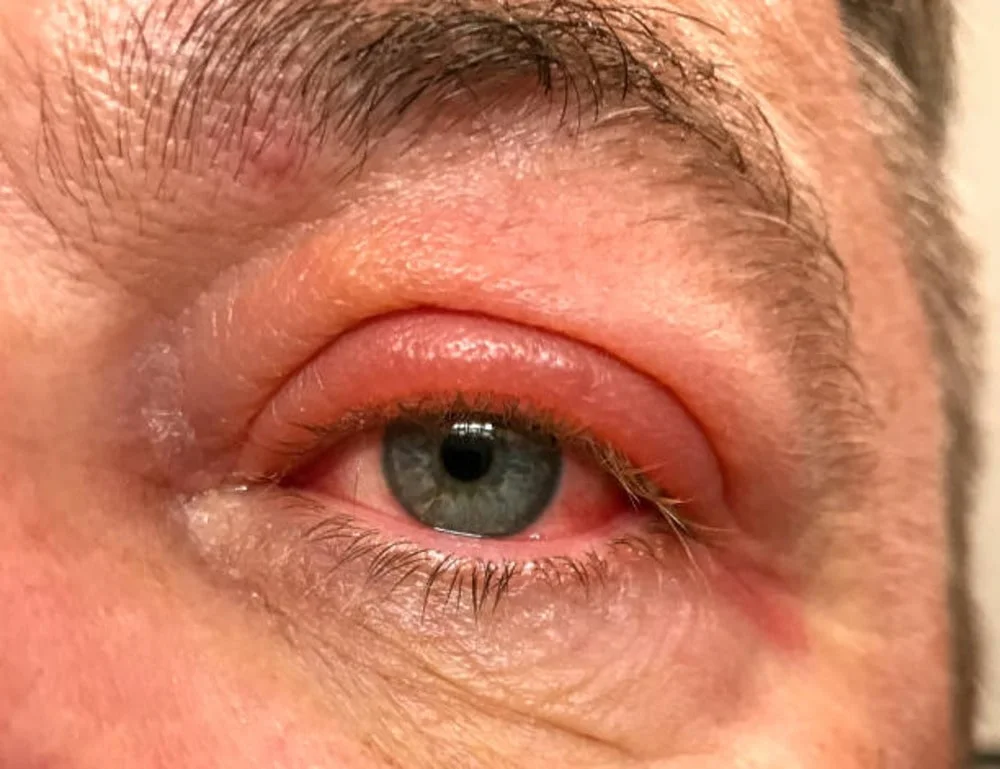

Quick answer: most red bumps on the eyelid are a stye or a chalazion. A stye is a painful, red bump at the edge of the eyelid caused by an infected oil gland or eyelash follicle. A chalazion is a firmer, usually painless lump from a blocked oil gland, often a little farther from the lash line. Both usually improve with warm compresses 3 to 4 times a day. See a medical provider if the bump is not better after 1 to 2 weeks, the whole eyelid becomes red and swollen, or you have a fever. Get emergency care for vision changes, pain when moving the eye, or swelling that spreads around the eye.
Common causes of a red bump on the eyelid
Stye (hordeolum): a tender, red bump at the lash line, sometimes with a yellow or white head of pus. It is usually caused by Staphylococcus bacteria. Most styes drain and heal on their own within about a week.
Chalazion: a firm, usually painless lump that forms when an oil gland in the eyelid becomes blocked. It can follow a stye. A large chalazion can press on the eye and blur vision slightly.
Blepharitis: ongoing inflammation of the eyelid edges that causes redness, itching, crusting at the lashes, and repeated styes. It is often linked to skin conditions such as rosacea or dandruff.
Allergic or irritant reactions: makeup, skin care products, pollen, or pet dander can cause itchy, puffy, red eyelids, usually on both sides.
Insect bites: a bite can cause sudden eyelid swelling and redness that usually improves with a cold compress.
What raises the risk of a stye
- Touching or rubbing the eyes with unwashed hands
- Old or shared eye makeup, or sleeping in makeup
- Contact lenses that are not cleaned or replaced as directed
- Blepharitis, rosacea, or a previous stye
Home care
- Warm compresses: hold a clean, warm washcloth on the closed eyelid for 10 to 15 minutes, 3 to 4 times a day. This helps the gland drain.
- Keep the lid clean: gently wash the lash line with diluted baby shampoo or an eyelid cleanser.
- Do not squeeze or pop it: this can spread infection deeper into the eyelid.
- Skip eye makeup and contact lenses until it has healed, and replace eye makeup used just before the stye appeared.
Styes that keep coming back, crusty lashes, or eyelids that feel gritty and dry are often signs of blepharitis (inflammation of the eyelid margin) or Demodex mites rather than a one-time infection. The Dry Eye Center on inlandeyedoctor.com explains long-term eyelid care in its guides to blepharitis and Demodex treatment, meibomian gland dysfunction, and the full Dry Eye Center.
Treatment a provider may recommend
Depending on the cause, treatment may include an antibiotic ointment or drops for infection around the stye, oral antibiotics if redness is spreading into the eyelid skin, and referral to an eye doctor for a chalazion that does not go away, which can be drained or treated with a steroid injection.
When to get care
- The bump is not improving after 1 to 2 weeks of warm compresses
- Redness and swelling spread across the eyelid or onto the cheek
- You have a fever with eyelid swelling
- Styes keep coming back
- A child has a swollen, red eyelid
Go to the emergency room for loss of vision or double vision, pain when moving the eye, a bulging eye, or swelling with fever that is getting worse quickly. These can be signs of an infection around the eye that needs urgent treatment.
Related services: skin conditions and infections and allergy treatment.
Walk in today, no appointment needed
Advanced Urgent Care of Pasadena is at 797 S Arroyo Pkwy, Pasadena, next to Petco, with free on-site parking. We are open Monday through Friday 8 AM to 8 PM and Saturday and Sunday 9 AM to 5 PM, and we take our last patient 30 minutes before closing. You can walk in or reserve a time online. We serve Pasadena, South Pasadena, Altadena, San Marino, Alhambra, and nearby communities. Questions? Call (626) 304-0404. See our accepted insurance plans.
Sources
This article is general health information and is not a substitute for an examination by a medical provider. If you think you are having a medical emergency, call 911.