
Quick answer: get the stinger out as fast as you can, wash the skin with soap and water, and apply a cold pack. Pain, redness, and a small area of swelling are normal and usually ease within hours to a couple of days. Trouble breathing, swelling of the face or throat, widespread hives, or dizziness after a sting is an emergency: use an epinephrine auto-injector if you have one and call 911.
Bee sting first aid, step by step
- Move away calmly. A stung honeybee releases a scent that can draw other bees.
- Remove the stinger immediately. Scrape it off with a fingernail, the edge of a card, or a piece of gauze. The venom sac keeps pumping for several seconds, so do not wait. Avoid squeezing the stinger with tweezers, which can push more venom into the skin.
- Wash the area with soap and water.
- Apply a cold pack wrapped in a cloth for 10 to 20 minutes at a time to limit swelling and pain.
- Raise the limb if the sting is on an arm or leg, and remove rings or tight jewelry before swelling starts.
- Treat itching and pain. An oral antihistamine or 1% hydrocortisone cream helps itching. Acetaminophen or ibuprofen helps pain, if those are safe for you.
- Do not scratch. Broken skin is how a sting gets infected.
What a normal reaction looks like
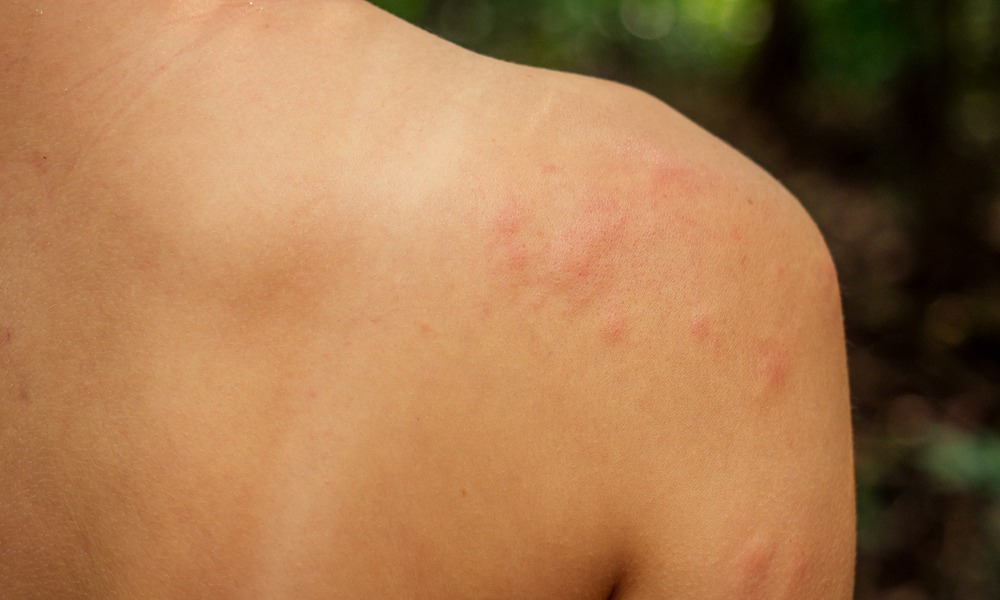
Most stings cause a sharp, burning pain, a red welt, and a small area of swelling around the sting. The pain usually fades within a few hours, and the redness and swelling settle over a day or two.
Large local reactions
Some people develop a large local reaction: swelling that keeps growing for 24 to 48 hours, extends several inches beyond the sting, and can involve much of an arm or leg. It looks alarming and is often mistaken for an infection, but it is a reaction to the venom. It usually settles over several days to a week or longer with cold packs, elevation, and an antihistamine. An examination is worthwhile if the swelling is severe, crosses a joint, or you are not sure whether it is infected. A provider may prescribe a short course of medicine to bring the swelling down.
Signs of a severe allergic reaction (anaphylaxis)
A severe allergic reaction usually begins within minutes to an hour of the sting. Call 911 for any of these:
- Hives, flushing, or itching in areas away from the sting
- Swelling of the face, lips, tongue, or throat
- Trouble breathing, wheezing, or a hoarse voice
- Dizziness, fainting, or a rapid or weak pulse
- Nausea, vomiting, stomach cramps, or diarrhea
If an epinephrine auto-injector is available, use it right away and still call 911. Symptoms can return after the first dose wears off. Do not drive yourself to a clinic during a severe reaction.
Other stings that need emergency care
- A sting inside the mouth or throat, because swelling there can block the airway
- Many stings at once, especially in a child, an older adult, or a person with heart or lung disease
- Any sting in a person with a known severe allergy to stings who develops symptoms beyond the sting site
When to come to urgent care
- Swelling that is still spreading after 48 hours
- A sting on the eyelid or close to the eye
- A stinger you cannot get out
- Signs of infection, which typically appear a few days after the sting rather than on the first day: increasing pain, warmth, pus, red streaks, or fever
- Itching or swelling that over-the-counter medicine is not controlling
- A large local reaction that makes it hard to use a hand or to walk
We evaluate bites and stings at our minor injury service and treat skin infections at our skin conditions and infections service. Our allergy treatment service covers allergic reactions that are not life threatening.
Bee, wasp, or hornet?
Honeybees leave a barbed stinger behind and sting once. Wasps, hornets, and yellow jackets do not leave a stinger and can sting repeatedly. First aid is the same for all of them, apart from the stinger removal step. For other bites, see our guide to summer bug bites.
If you have had a serious reaction before
Anyone who has had a severe reaction to a sting should carry a prescribed epinephrine auto-injector, make sure family members know how to use it, and ask about seeing an allergist. Venom allergy shots (venom immunotherapy) greatly reduce the risk of a severe reaction to a future sting.
Preventing stings
- Keep food and sweet drinks covered outdoors, and check open cans before drinking.
- Wear shoes on grass.
- Stay calm and move away slowly from a bee or wasp. Swatting provokes stings.
- Have nests near doors, play areas, or patios removed by a professional.
Walk in today, no appointment needed
Advanced Urgent Care of Pasadena is at 797 S Arroyo Pkwy, Pasadena, next to Petco, with free on-site parking. We are open Monday through Friday 8 AM to 8 PM and Saturday and Sunday 9 AM to 5 PM, and we take our last patient 30 minutes before closing. We serve Pasadena, South Pasadena, Altadena, San Marino, Alhambra, and nearby communities. Questions? Call (626) 304-0404.
Sources
- American Academy of Dermatology: How to treat a bee sting
- American College of Allergy, Asthma and Immunology: Insect sting allergies
This article is general health information and is not a substitute for an examination by a medical provider. If you think you are having a medical emergency, call 911.